The narrator’s birth
A Divided Birth
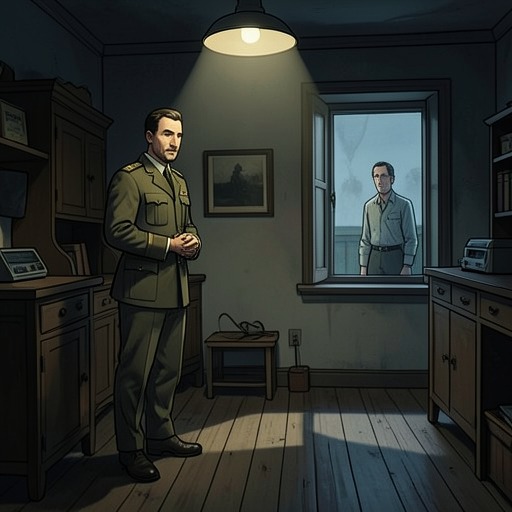
[The unnamed narrator](entity:character-recall-character-the-unnamed-narrato-29883ed1ce60) is born to a poor Vietnamese mother and a French Catholic priest who fathers him but never acknowledges him. His origins make him a child caught between worlds before he can understand what either world demands.
His mother insists that he is not unnatural and gives him a way to imagine his mixed inheritance as possibility rather than defect. The rejection he faces from others, however, becomes an early lesson in being treated as an outsider.
The narrator’s early childhood
The Red Envelope Lesson
At a family New Year gathering, the narrator performs his greeting correctly but Aunt Two refuses him a red envelope, saying she has one fewer than she needs. His cousins explain the slight by calling him half-blooded and a bastard.
His mother comforts him at home and promises that he will work and study harder than the others. The humiliation becomes a formative spur, while the red envelope acquires a meaning beyond luck: a mark of blood, exclusion, and eventual revolt.
Around age eleven
The Father Revealed
After a classmate mocks him by comparing his origins to the mating of a dog and a cat, the narrator fights the boy and returns home in tears. His mother tells him that his father is the priest who taught her to read when she worked as his maid.
She frames their relationship through faith and insists that the narrator has a destiny. The revelation turns his father’s sermons about sin into something intimate and contradictory: the holy man preaching Original Sin is also the man who made him.
The narrator’s childhood
The First Schoolyard Fight
After a classmate calls him unnatural, the narrator attacks him in the churchyard, beating him until the other children stop laughing. His mother receives his tearful account and reassures him that he is not unnatural.
The fight offers a harsh early education in how violence can answer humiliation without undoing it. The narrator learns that others may see him as a creature neither fully one thing nor another, while his mother’s love gives him a countervailing sense of belonging.
1954
Flight from the North
At nine, the narrator leaves northern [Vietnam](entity:location-recall-location-vietnam-a68cec34d420) with his mother during the refugee exodus to the south. He has no say in the move, but the separation of the country and the family’s flight become part of the history that shapes his divided identity.
In later years, he understands that his mother was among the poor people who never chose war or displacement. That memory complicates his later service to a southern regime and his sympathy for people he is supposed to regard as enemies.
1954
Claude Finds the Boy
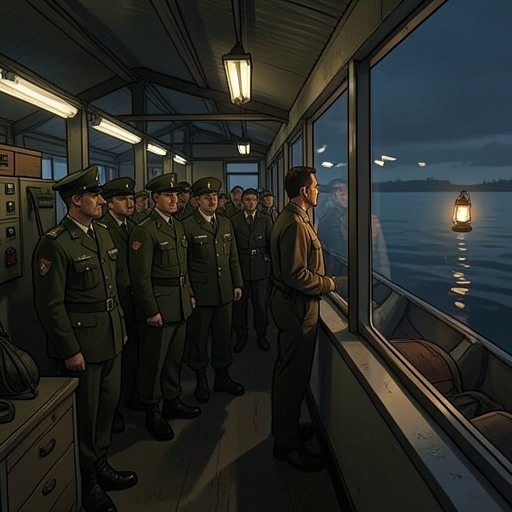
On a refugee barge, [Claude](entity:character-recall-character-claude-d6d058add4a4) notices the nine-year-old narrator’s unusual ability to speak English and recognizes his promise. Claude is ostensibly working in refugee relief, though his long involvement in [Vietnam](entity:location-recall-location-vietnam-a68cec34d420) is already tied to American intelligence.
The encounter begins a relationship that will make Claude the narrator’s mentor in American culture and intelligence work. It also links the boy’s escape from one upheaval to the powerful foreign presence that will shape the next decades of his life.
The narrator’s lycée years
The Blood-Brother Oath
At school, [Man](entity:character-recall-character-man-2cb5bd004ded) steps in when older boys target the narrator, and [Bon](entity:character-recall-character-bon-771cff9cb6bd) joins the fight despite being outnumbered. The three boys emerge bruised but exhilarated, having proved that they will stand together against bullies.
That night they cut their palms and mingle their blood, swearing loyalty to one another. The oath becomes a bond stronger than kinship and an enduring measure against which their later political betrayals and sacrifices will be judged.
The narrator’s lycée years
The Underground Study Group
[Man](entity:character-recall-character-man-2cb5bd004ded) organizes a secret three-person study group, guiding the narrator and another student through revolutionary texts and Party ideology. He teaches them the logic of hierarchy and compartmentalized cells, while the identities of higher committees remain hidden.
The narrator learns to understand secrecy as a discipline rather than mere concealment. Man’s instruction points toward the role the narrator will eventually occupy: visible within the structures of power, yet secretly working against them.
The narrator’s youth
The Mole’s Lesson
[Man](entity:character-recall-character-man-2cb5bd004ded) explains that a mole does not hide where nobody can see him. The spy must remain in plain sight, where everyone can look at him without recognizing what he is, and where he can observe power from within.
He points to the narrator’s face as the obvious disguise: the feature everyone sees is also the one its owner may stop noticing. The lesson turns the narrator’s visibility, including his mixed heritage, into a tool of covert work.
The 1960s
A Scholarship to America
The narrator wins a scholarship to [Occidental College](entity:location-recall-location-1aaf8ba0d8ee) in Southern [California](entity:location-recall-location-7255928c66a8). At [Man](entity:character-recall-character-man-2cb5bd004ded)’s direction, he studies American history, literature, language, and habits, treating his education as both academic training and intelligence work.
He learns the rhythms of American speech, indulges in music and marijuana, and loses his virginity. The experience gives him a genuine attachment to American life even as it equips him to serve a revolution that opposes American power.
During college in the 1960s
A Talent for Contradiction
On campus, the narrator encounters Emerson’s claim that consistency is the hobgoblin of little minds. He recognizes in it a description of both the [United States](entity:location-recall-location-5d55e9152db1) and [Vietnam](entity:location-recall-location-vietnam-a68cec34d420), societies that proclaim ideals while repeatedly violating them.
The thought gives intellectual shape to the narrator’s instinct to view every issue from two sides. What first seems a talent will later prove to be a hazard: he cannot easily stop seeing contradictions even when his superiors demand a single answer.
During the narrator’s junior year in college
His Mother’s Death
While the narrator is studying in America, his father writes to say that his mother has died of tuberculosis. He has seen her only rarely since leaving for school, and the news arrives without warning in a short, spare letter.
Her death leaves him with grief and the knowledge that their last farewell was also their last meeting. The notebook and pen she gave him before he left become the lost tokens of a woman who could barely write but believed his words might carry him farther than hers could.
After college and before April 1975
The Student Becomes an Officer
After returning to [Vietnam](entity:location-recall-location-vietnam-a68cec34d420), the narrator serves first in the [South Vietnamese Army](entity:organization-recall-organization-4b0b014c6441) and later moves with [The General](entity:character-recall-character-the-general-c37b83fed865) into the National Police. His fluency in English and knowledge of American culture make him a useful aide in dealings with American advisers.
Behind that public role, he remains an operative for [Man](entity:character-recall-character-man-2cb5bd004ded)’s side. His position gives him access to sensitive information and forces him to inhabit the contradiction at the center of his life: he is trusted by the regime he is secretly helping to undermine.
Three years before April 1975
The Raid on the Agent
During a raid, the narrator helps arrest a young Communist agent and pulls a saliva-soaked list of names from her mouth. The list includes members of the [Special Branch](entity:organization-recall-organization-special-branch-bae0536c3cd6), exposing the fact that the watchers themselves are being watched.
He cannot reveal his allegiance without destroying his cover, and he sees the agent’s hatred as she mistakes him for an enemy. She remains in prison for years, while the narrator keeps her file as a reminder that he failed to save her.
Before the fall of Saigon
The Cholon Casino Raid
The narrator and the crapulent major raid a rice-wine merchant’s hidden casino in [Cholon](entity:location-recall-location-cholon-b3a1f0a09e1f), where the owner is suspected of collecting taxes for the [National Liberation Front](entity:organization-recall-organization-national-liberat-7d84fadd7f72). The narrator has already warned [Man](entity:character-recall-character-man-2cb5bd004ded), so he expects the suspected operative to be absent, but the raid still brings arrests and violence.
The suspect is beaten and later shown not to be a Viet Cong operative. The major takes a bribe from the man’s wife and shares it with the narrator, who passes his share to Man for the revolution. The episode reveals both the narrator’s complicity in corrupt policing and the major’s ordinary place within it.
Before the fall of Saigon
The Watchman’s Interrogation
At the [National Interrogation Center](entity:organization-recall-organization-national-interro-22cb29c5c984), [Claude](entity:character-recall-character-claude-d6d058add4a4) teaches the narrator to use psychological pressure rather than crude force. The narrator later oversees the isolation of the Watchman, a captured bomb-maker linked to [Z-99](entity:organization-recall-organization-z-99-661f6484dfac), in a stark white room filled with light and looping country music.
When the Watchman calls the narrator a defective hybrid, the narrator retaliates by inventing a false confession that would destroy the prisoner’s relationship with his family and comrades. The narrator earns Claude’s praise, but the Watchman later chokes to death on a hard-boiled egg, leaving the narrator with a memory of his own cruelty.
After the narrator’s return to California
The Father’s Assassination
The narrator’s father dies from a bullet to the head. Only later does the narrator learn that the Communist agent arranged the killing after receiving the narrator’s anguished wish that his father were dead.
The death forces the narrator to confront the power of a private sentence when it reaches a revolutionary who knows him intimately. He had imagined his father’s disappearance, but did not understand that his words could become an instruction carried out by others.
March 1975
The Northern Front Collapses
As the northern front collapses, reports reach [The General](entity:character-recall-character-the-general-c37b83fed865) that [Ban Me Thuot](entity:location-recall-location-33c9627d5f26), Da Nang, and Nha Trang have fallen. Retreating South Vietnamese forces and civilians are caught in chaos, while the [United States](entity:location-recall-location-5d55e9152db1) refuses the additional money that might have prolonged the regime’s military effort.
The General’s confidence in the American alliance gives way to disbelief. The narrator photographs reports for [Man](entity:character-recall-character-man-2cb5bd004ded), feeling both the revolutionary significance of the regime’s decline and compassion for civilians caught in a war they never chose.
April 1975
The General Chooses Evacuees
As [Saigon](entity:location-recall-location-saigon-8e32829ea347)’s fall approaches, [The General](entity:character-recall-character-the-general-c37b83fed865) asks [Claude](entity:character-recall-character-claude-d6d058add4a4) for an unlisted C-130 flight. The plane can carry ninety-two people, but [Madame](entity:character-recall-character-madame-e4b986404c22) insists that her extended family must be rescued, leaving the General to confront the limits of what he can save.
He gives the narrator responsibility for choosing officers and dependents for evacuation. The narrator selects a small group, includes [Bon](entity:character-recall-character-bon-771cff9cb6bd) and his family, and leaves many senior officers behind. Every name on the list feels like a sentence passed on someone he knows.
April 1975
Man’s American Assignment
In a clandestine meeting at the basilica, [Man](entity:character-recall-character-man-2cb5bd004ded) tells the narrator that he must leave [Vietnam](entity:location-recall-location-vietnam-a68cec34d420) with [The General](entity:character-recall-character-the-general-c37b83fed865) and watch the exiled officers. The narrator’s mission is to monitor their plans and report to the revolution through Man’s aunt in [Paris](entity:location-recall-location-657453741ed3).
Man knows the narrator wants to see America again and uses that desire to secure his agreement. The assignment separates the blood brothers: [Bon](entity:character-recall-character-bon-771cff9cb6bd) will flee believing Man will follow, while Man stays behind for the coming liberation.
The final days before April 1975
Bon Chooses Exile
The narrator and [Man](entity:character-recall-character-man-2cb5bd004ded) persuade [Bon](entity:character-recall-character-bon-771cff9cb6bd) to leave [Saigon](entity:location-recall-location-saigon-8e32829ea347) with his wife Linh and their son Duc rather than fight to the death. They tell him Man will also escape, concealing the truth that Man will remain in the south.
The three friends drink together in a beer garden and swear that their brotherhood will survive the loss of their country. The narrator’s sympathy for Bon is sincere, but it is entangled with a deception that will haunt all three men.
The evening before the evacuation
The Marine Confrontation
After a night of drinking and songs, the narrator, [Bon](entity:character-recall-character-bon-771cff9cb6bd), and [Man](entity:character-recall-character-man-2cb5bd004ded) encounter three drunk marine lieutenants in an alley. One calls the narrator a bastard, and the narrator draws his revolver before choosing not to shoot him.
Bombs then strike the airport, and the men scatter. The insult stays with the narrator not because it is new, but because it exposes how deeply a name he has heard since childhood can still wound him.
April 1975
Bribing the Airport Guards
To get the convoy through the airport, the narrator pays officials and arranges a large bribe for the young lieutenant guarding the gates. The officer accepts the money and allows the buses through, preserving a remnant of dignity by keeping his side of the bargain.
The narrator admires the lieutenant even as the bribe exposes the moral compromises required for escape. A regime’s last passage out of the city depends not on its slogans but on desperate people making private bargains.
The night of the evacuation in April 1975
A Farewell Through Saigon
[The General](entity:character-recall-character-the-general-c37b83fed865) leads the convoy through a deliberately circuitous route, stopping at public landmarks before finally turning toward the airport. The narrator and the evacuees pass familiar streets, cafés, the cathedral, and a monument whose meaning has been compromised by coups and political failures.
The journey becomes a farewell to the city as a lived place: its beauty, poverty, pleasures, and contradictions. The convoy carries people away from a world whose ending they have long suspected but cannot yet accept.
Late evening in April 1975
The Evacuation Convoy Reaches the Airfield
At the airport, the evacuees turn over their weapons and wait among thousands of people in the Defense Attaché compound. Families crowd the tennis courts as aircraft come and go, while no one knows when the next plane will take them.
The narrator recognizes a bureaucrat whose visas he had forced him to sell cheaply. The man’s hatred makes clear that the evacuation has not erased the narrator’s choices; it has only carried their consequences into the next phase of his life.
Before dawn in April 1975
The First Plane Burns
A C-130 carrying the evacuees is struck by explosions as it taxis. The loadmaster lowers the ramp, and the frightened passengers spill onto the runway while the aircraft burns under artillery and rocket fire.
The escape collapses into a scramble for cover. The narrator, [Bon](entity:character-recall-character-bon-771cff9cb6bd), and the General survive the immediate blast, but the plane is lost and the crowd must wait again under fire for another chance to leave.
Dawn in April 1975
Linh and Duc Are Killed
When evacuees run toward a second C-130, Linh and Duc are hit by a bullet on the runway. [Bon](entity:character-recall-character-bon-771cff9cb6bd) kneels over them in shock, and the narrator drags him away so the family can be carried toward the departing plane.
The narrator lifts Linh’s body while Bon carries his dead child, then pushes Bon aboard as the aircraft takes off. Their escape saves their lives but destroys Bon’s family, leaving him convinced that he has failed as a husband, father, and soldier.
The first days after the evacuation
The General Is Beaten at Guam
At Camp Asan on [Guam](entity:location-recall-location-b1925c80f649), [The General](entity:character-recall-character-the-general-c37b83fed865) walks among civilian refugees in uniform, hoping to raise morale. Women whose husbands and sons remained behind attack him with slippers, canes, and umbrellas, blaming him for abandoning the people he once commanded.
The narrator shields him and gets him back to their barracks. The General is shaken by the humiliation and orders that the incident never be discussed, revealing how completely his authority has been stripped away.
Shortly after arrival on Guam
The Family Burial
[Bon](entity:character-recall-character-bon-771cff9cb6bd) buries Linh and Duc together, throwing himself into their grave and asking why they died instead of him. The narrator climbs down to calm him before the coffins are covered with earth.
The deaths leave Bon unable to imagine a future and leave the narrator with a godson he had loved as nearly a son. Neither religious consolation nor military explanations can make the loss bearable.
Summer 1975
The Refugees Reach Pendleton
The refugees are transferred from [Guam](entity:location-recall-location-b1925c80f649) to Camp Pendleton in [California](entity:location-recall-location-7255928c66a8). The narrator writes to [Man](entity:character-recall-character-man-2cb5bd004ded)’s aunt in [Paris](entity:location-recall-location-657453741ed3), using ordinary remarks about weather and health to conceal coded reports intended for Man.
[Bon](entity:character-recall-character-bon-771cff9cb6bd) remains devastated, and the narrator forces him to eat and keeps him company. The camps provide shelter but also turn the refugees into people without a country, dependent on American sponsors and the uncertain goodwill of strangers.
The first days on Guam
The General’s Failed Morale Walk
After the fall of [Saigon](entity:location-recall-location-saigon-8e32829ea347), [The General](entity:character-recall-character-the-general-c37b83fed865) tries to encourage refugees in the camp, but civilians recognize his uniform and rank as symbols of the officers who left their families behind. They beat him and tear at his clothes.
The incident marks a turning point in his exile. The General can no longer assume that soldiers and civilians will respond to command; in America, he has become a defeated officer among people who have their own reasons to condemn him.
Summer 1975 at Camp Pendleton
The General Suspects a Spy
[The General](entity:character-recall-character-the-general-c37b83fed865) asks the narrator whether there may be a Communist spy among the exiles. To divert suspicion from himself, the narrator suggests the crapulent major, whose name the General rejects as an unlikely possibility.
The exchange quietly plants an accusation that will later become an order to kill. The narrator has protected his own cover by redirecting suspicion, but the innocent man he names will pay for the choice.
Summer and early autumn 1975
A Sponsor and a New Life
[Avery Wright Hammer](entity:character-recall-character-avery-wright-hammer-7e9a1286422b), the narrator’s former professor, sponsors him and arranges a clerical job in the Department of Oriental Studies. The narrator leaves Camp Pendleton for [Los Angeles](entity:location-recall-location-a4be76fb5f5a), rents an apartment, and buys a used car.
He then helps [Bon](entity:character-recall-character-bon-771cff9cb6bd) find a sponsor through a small church, bringing his friend to [California](entity:location-recall-location-7255928c66a8). Their new life begins in poverty and grief, with the narrator working at a college and Bon surviving on welfare and a part-time job.
After the narrator begins work in Los Angeles
The Department Chair’s Identity Lesson
At the university, the Department Chair asks the narrator to sort his traits into Oriental and [Occidental](entity:organization-recall-organization-85ab70bdd17f) categories. He treats the exercise as a cure for the narrator’s divided identity and predicts that mixed people will eventually embody a reconciliation of East and West.
The narrator answers that he is Eurasian rather than Amerasian, but the Chair dismisses the distinction. The conversation exposes how even sympathetic Americans can impose ready-made racial theories on the people they claim to understand.
Late 1975 into 1976
Coded Letters from California
The narrator receives coded messages from [Man](entity:character-recall-character-man-2cb5bd004ded) through the Parisian aunt and replies with invisible writing. Man reports that the country is being rebuilt and that his superiors approve of the narrator’s intelligence, while warning that subversives have been detained.
In [Los Angeles](entity:location-recall-location-a4be76fb5f5a), little seems to happen among the exiles except grief, poverty, and adjustment. The narrator’s reports remain useful precisely because he is embedded in the community and can describe its daily life without attracting suspicion.
Early 1976
The General Opens a Liquor Store
[The General](entity:character-recall-character-the-general-c37b83fed865), unable to live on memories of military command, opens a liquor store on [Hollywood Boulevard](entity:location-recall-location-9b6219806231). [Madame](entity:character-recall-character-madame-e4b986404c22) manages the household and the children while he adjusts to the work and humiliation of making a living in exile.
[Bon](entity:character-recall-character-bon-771cff9cb6bd) becomes the store’s clerk. During the opening, The General tells the narrator that an informer may be among their ranks, and the narrator realizes that the earlier suspicion he deflected toward the crapulent major has returned with dangerous force.
By April 1976
The Narrator and Sofia Begin an Affair
The narrator and [Sofia Mori](entity:character-recall-character-sofia-mori-50a5093ef3c9), once office colleagues, become lovers. They meet in bars and apartments and have a relationship that rejects conventional commitment, reflecting Sofia’s insistence on sexual freedom and her refusal to accept the Department Chair’s ideas about cultural belonging.
The narrator says he is falling in love, but Sofia warns him that their intimacy carries no promise of marriage. Their relationship offers warmth and pleasure while exposing his tendency to seek attachment without being able to name what he wants.
Spring 1976
The Crapulent Major Is Marked
[The General](entity:character-recall-character-the-general-c37b83fed865) accuses the crapulent major of being a spy, citing his Chinese background, his family’s apparent prosperity in [Saigon](entity:location-recall-location-saigon-8e32829ea347), and his weight. [Claude](entity:character-recall-character-claude-d6d058add4a4) challenges the evidence but does not stop the General from ordering the problem corrected.
The narrator knows the major may be innocent. [Bon](entity:character-recall-character-bon-771cff9cb6bd), however, welcomes the prospect of action after a year of grief, and the two men begin planning a killing that neither can honestly call necessary.
Several Sundays in May and June 1976
The Major’s Routine
The narrator watches the crapulent major leave his gas station job and walk home each Sunday. He studies the apartment carport, the surrounding windows, and the late-night arrival of a Chinese chef who appears to be a visitor to the major’s household.
The surveillance becomes a grim preparation for murder. The narrator learns the rhythms of the man’s ordinary life while trying to persuade himself that a carefully staged killing can be made to look like something else.
July 4, 1976
The Major Is Killed
On Independence Day, the narrator approaches the crapulent major with a bag of oranges and firecrackers while [Bon](entity:character-recall-character-bon-771cff9cb6bd) waits with a [.38 Special](entity:object-recall-object-38-special-73afe73c1099). Bon cannot shoot the man in the back; when the major turns, Bon fires into his forehead.
The men dispose of evidence and drink to the dead man, but the narrator cannot escape the image of the wound as a third eye. The killing secures their place in the General’s movement while beginning the narrator’s persistent guilt and haunting.
Days after July 4, 1976
The Major’s Funeral
[The General](entity:character-recall-character-the-general-c37b83fed865) gives the crapulent major a public funeral, praising him as a self-sacrificing patriot killed in a robbery. The narrator photographs the ceremony and sends the images to [Man](entity:character-recall-character-man-2cb5bd004ded) through the Parisian aunt.
The widow and her infant twins receive a small payment from the General’s operational funds. The narrator’s public role in the funeral sits beside his private knowledge that he helped arrange the killing.
At the General’s liquor-store opening in 1976
Sonny Returns as a Journalist
The narrator meets [Son Do](entity:character-recall-character-son-do-f297709845f3), now known as [Sonny](entity:character-recall-character-sonny-bd6b1751f871), who has stayed in America and started a Vietnamese-language newspaper. Sonny says that he wants to connect refugees through news and arrange a later meeting with the narrator.
The reunion brings an old political acquaintance into the General’s orbit. Sonny’s independent journalism will soon challenge the exile movement’s plans, while the narrator’s history with him makes it harder to treat him as a simple enemy.
At a refugee wedding in 1976
Lana Reappears
At a wedding, the narrator sees [The General](entity:character-recall-character-the-general-c37b83fed865)’s daughter [Lana](entity:character-recall-character-lana-17c57648389f) performing as a confident rock singer, far removed from the modest schoolgirl he remembers. She has left [Berkeley](entity:location-recall-location-bfa6c84ffbc2) and chosen a life her parents consider scandalous.
The narrator is drawn to her transformation and tells her that she looks like the woman he imagined she would become. [Madame](entity:character-recall-character-madame-e4b986404c22) interrupts their conversation, but the encounter opens a new source of desire and conflict in the narrator’s life.
Spring 1976
The Congressman Courts the Exiles
[The General](entity:character-recall-character-the-general-c37b83fed865) and [Madame](entity:character-recall-character-madame-e4b986404c22) visit the Anti-Communist [Congressman](entity:character-recall-character-congressman-8b89499e092b), who promises support for their community and introduces a proposed film about the war. He offers the narrator a chance to advise on its screenplay, whose story centers on an American Green Beret saving a Vietnamese hamlet.
The narrator accepts the work as an opportunity to improve how Vietnamese people are represented. The offer also links the exile movement to a politician who can open doors in American politics and funding.
Before filming The Hamlet
The Narrator Challenges the Director
The narrator meets the [Film director (Auteur)](entity:character-recall-character-auteur-fc6c64a17fe3) and objects that Vietnamese characters in the screenplay mostly scream rather than speak. He writes a corrected version of their scream on the script and argues that the film’s lack of Vietnamese voices makes its supposedly authentic war story false.
The director resents the criticism and orders him out, insisting that the narrator has no filmmaking experience. The confrontation reveals that the director wants the appearance of consultation more than a challenge to who controls the story.
Before production in the Philippines
The Refugees Join the Film
The narrator accepts a paid consulting job on the film and travels to [the Philippines](entity:location-recall-location-8b86fdcbfca5). At the [Bataan refugee camp](entity:location-recall-location-871f9482f32e), he recruits Vietnamese boat people as extras, offering them a dollar a day; none bargains for higher wages.
A refugee lawyer tells him that foreigners once victimized and humiliated them, and now their own people do the same. The remark revives the narrator’s doubts about both the revolution and his part in a movie that will turn their suffering into American entertainment.
Early in filming in the Philippines
A Grave for His Mother
The narrator visits the recreated hamlet and finds comfort in its familiar details, then asks [Harry](entity:character-recall-character-harry-51d33e4b3663) for a cemetery in which to place a likeness of his mother. He uses the only surviving photograph he carries and paints her name and dates on the grave marker.
The fictional tomb gives his mother a resting place more fitting than the life she had, though the set’s cemetery is built only for cinematic authenticity. Its eventual destruction will make the manufactured landscape feel painfully personal.
During the early months of filming
Vietnamese Roles on the Screen
The director adds speaking roles for [Binh](entity:character-recall-character-binh-85801b100f7b), [Mai](entity:character-recall-character-mai-f774874153d2), and [Danny Boy](entity:character-recall-character-danny-boy-2b81e1b3f7e1), but the production casts other Asians rather than Vietnamese performers. The narrator recognizes that the new characters still fit a familiar pattern: Vietnamese people exist mainly to suffer, inspire Americans, or be rescued.
The refugees are assigned roles as civilians, South Vietnamese soldiers, or Viet Cong, and many resist playing the enemy. Higher pay persuades some to accept, but money cannot make the roles any less humiliating.
During the Philippines shoot
The Water-Cure Scene
The narrator objects to the scripted rape of [Mai](entity:character-recall-character-mai-f774874153d2), but the director calls the scene a necessary shock and insults him as a sellout. Later, the narrator watches the extras play Viet Cong torturers while [James Yoon](entity:character-recall-character-james-yoon-bb6e2eede0bd) undergoes repeated water-cure takes as [Binh](entity:character-recall-character-binh-85801b100f7b).
The scene’s simulated cruelty mirrors real interrogations the narrator has witnessed. It also shows how a movie can turn Vietnamese bodies into spectacle while claiming to reveal the truth of war.
Near the end of filming in the Philippines
The Cemetery Explosion
Without the narrator’s knowledge, the director orders the cemetery prepared for destruction. The narrator visits his mother’s grave to say goodbye, and an explosion tears through the set, hurling him into fire and smoke.
He survives with burns, bruises, smoke inhalation, and a concussion, but loses a portion of his memory. The cemetery’s destruction turns the film’s casual use of death into a personal wound and leaves him unsure what the explosion erased.
Immediately after the cemetery explosion
The Narrator Wakes in Manila
The narrator wakes in a [Manila](entity:location-recall-location-3c451f691d68) hospital and hears that he is remarkably lucky to be alive. The four refugee extras visit with fruit and whiskey, thanking him for standing up for them during the production.
[Violet](entity:character-recall-character-violet-60b657545985) and a studio representative later offer him money to settle the studio’s responsibility. He negotiates the payment upward, but remains troubled by the unidentifiable piece of memory he believes the explosion has taken from him.
After the film’s release
The Film Erases the Narrator
The narrator and [Bon](entity:character-recall-character-bon-771cff9cb6bd) watch [The Hamlet](entity:object-recall-object-the-hamlet-c58be8c32886) in [Bangkok](entity:location-recall-location-6c9ff5ae0aa7). Vietnamese characters remain largely voiceless, and the movie turns the war into a story of American rescue, revenge, and military triumph.
When the credits omit the narrator’s name, he understands that his labor has helped authenticate a representation that still erases him. Bon tells him that the production used Vietnamese people as proof of its own benevolence without giving them power over the story.
After the Philippines shoot
The Narrator Returns to Los Angeles
The narrator returns to [Los Angeles](entity:location-recall-location-a4be76fb5f5a) and finds [Bon](entity:character-recall-character-bon-771cff9cb6bd) waiting. He learns that [Madame](entity:character-recall-character-madame-e4b986404c22) has opened a Vietnamese restaurant whose profits support the General’s movement, while the business also gives displaced veterans work and a gathering place.
He visits the restaurant and sees how the refugees’ longing for home can be turned into both sustenance and political funding. [The General](entity:character-recall-character-the-general-c37b83fed865)’s next plan is taking shape, and the narrator’s place in it is once again uncertain.
After the narrator returns from the Philippines
The Major’s Widow Receives Help
The narrator visits the crapulent major’s widow in [Monterey Park](entity:location-recall-location-monterey-park-887e6f23ad8c) and gives her half of his settlement money. She welcomes him, speaks of missing her husband, and shows him their infant twins.
He cannot confess that he helped kill the major, but he tells her that he promised to look after the family. The visit is an attempt at atonement, though the widow’s kindness makes his concealed guilt more painful rather than less.
After the narrator’s return from the Philippines
Sonny and Sofia Together
The narrator arrives at [Sofia Mori](entity:character-recall-character-sofia-mori-50a5093ef3c9)’s apartment expecting to reconnect and finds [Sonny](entity:character-recall-character-sonny-bd6b1751f871) there. He learns that the two have become lovers and that Sofia has been sharing the narrator’s life with him while the narrator was away.
The encounter exposes the narrator’s attachment to Sofia and his resentment of Sonny. He questions Sonny’s commitment to the revolution, forcing his former friend to admit fear, hypocrisy, and the ways America has changed him.
After the narrator’s return to Los Angeles
The Exiles Train Again
[The General](entity:character-recall-character-the-general-c37b83fed865) organizes former South Vietnamese officers into a covert movement, using the [Benevolent Fraternity of Former Soldiers of the Army of the Republic of Vietnam](entity:organization-recall-organization-benevolent-frate-8953ef6adc06) as a public front. Charitable donations and the restaurant’s profits help support preparations for a return to [Vietnam](entity:location-recall-location-vietnam-a68cec34d420).
The narrator photographs the organization’s plans and sends them to [Man](entity:character-recall-character-man-2cb5bd004ded). At the General’s desert training maneuvers, former laborers and veterans put on uniforms and recover a sense of purpose, though many appear ready to die rather than return to their civilian lives.
After the exile army’s early maneuvers
Sonny Publishes His Warning
[Sonny](entity:character-recall-character-sonny-bd6b1751f871) publishes an article headlined “Move On, War Over,” questioning whether the General’s fraternity is secretly funding an armed movement and whether the exiles should stop dreaming of military return. The article gives public form to doubts that have circulated privately.
[The General](entity:character-recall-character-the-general-c37b83fed865) sees the report as dangerous propaganda that could weaken the movement. He asks the narrator whether Sonny might be a Communist agent, and the narrator knows that the question is also a test of his own loyalties.
Soon after “Move On, War Over” appears
The General Demands Action
[The General](entity:character-recall-character-the-general-c37b83fed865) tells the narrator that [Sonny](entity:character-recall-character-sonny-bd6b1751f871) has become dangerous and that something may need to be done. The narrator recognizes the ambiguity of the order but understands that his position in the movement depends on acting against the journalist.
[Man](entity:character-recall-character-man-2cb5bd004ded)’s coded message warns the narrator not to return to [Vietnam](entity:location-recall-location-vietnam-a68cec34d420), but the narrator does not yet know how to protect [Bon](entity:character-recall-character-bon-771cff9cb6bd) from the mission being prepared. His competing obligations begin to close around him.
Late 1976
The Narrator and Lana Grow Close
The narrator attends [Lana](entity:character-recall-character-lana-17c57648389f)’s performances at Fantasia and becomes increasingly drawn to her. She sings songs of lost [Saigon](entity:location-recall-location-saigon-8e32829ea347) and war, while the narrator courts her with letters, poems, and songs rather than asking directly for the intimacy he wants.
Lana offers him a view of the past that is emotional rather than political. Their attraction deepens as the narrator wrestles with his desire for her and his fear of violating [The General](entity:character-recall-character-the-general-c37b83fed865)’s trust.
Before the mission to Thailand
The General Gives His Test
The narrator asks [The General](entity:character-recall-character-the-general-c37b83fed865) to let him join the reconnaissance mission. The General says he has not been tested in battle and implies that he must prove himself by doing what needs to be done before he can return to [Vietnam](entity:location-recall-location-vietnam-a68cec34d420).
The narrator understands that The General means [Sonny](entity:character-recall-character-sonny-bd6b1751f871), though the order is never stated plainly. [Man](entity:character-recall-character-man-2cb5bd004ded)’s message says not to come back, but [Bon](entity:character-recall-character-bon-771cff9cb6bd) offers to kill Sonny in his place, leaving the narrator to decide whether to accept the easier path.
Before Sonny’s assassination
Bon Offers to Kill Sonny
In a billiards hall, [Bon](entity:character-recall-character-bon-771cff9cb6bd) tells the narrator he will take responsibility for killing [Sonny](entity:character-recall-character-sonny-bd6b1751f871). He explains that the General’s men have long used expansive lists of supposed enemies to justify assassination, often labeling people guilty before they have done anything.
Bon’s practical advice unsettles the narrator, who knows he cannot simply transfer the moral burden to his friend. The conversation frames killing as a military ritual that society expects warriors to perform but rarely wants to hear described.
The night before Sonny’s assassination
The Narrator Leaves Lana
The narrator visits [Lana](entity:character-recall-character-lana-17c57648389f) and confides that he has imagined killing his father and the film director. When she asks whether he has forgiven his father, he cannot give a settled answer.
Although Lana offers closeness, the narrator leaves, saying he has something serious to do first. He is preparing himself to kill [Sonny](entity:character-recall-character-sonny-bd6b1751f871), but he also cannot stop his desire for Lana from shaping the way he experiences the night.
Late 1976
Sonny Is Assassinated
The narrator visits [Sonny](entity:character-recall-character-sonny-bd6b1751f871)’s apartment disguised as an ordinary white man, carrying a silenced Walther P22. Sonny welcomes him, offers bourbon, and speaks of Sofia, love, and the ways America has changed his political hopes.
The narrator finally admits that he is a Communist, but Sonny does not believe him. When Sonny threatens to tell Sofia, the narrator shoots him. He discovers that Sonny is still alive by testing his eye, then fires again, leaving the apartment with the knowledge that he has crossed into murder.
Two days after Sonny’s assassination
The Narrator Goes to Thailand
[The General](entity:character-recall-character-the-general-c37b83fed865) gives the narrator a ticket and does not ask for details. The narrator leaves [California](entity:location-recall-location-7255928c66a8) with [Bon](entity:character-recall-character-bon-771cff9cb6bd), the [Grizzled Captain](entity:character-recall-character-grizzled-captain-3b0fe309e1f1), and the [Affectless Lieutenant](entity:character-recall-character-affectless-lieutena-6af06696c83c), knowing that the police may soon connect [Sonny](entity:character-recall-character-sonny-bd6b1751f871)’s death to his absence.
He carries his guilt and his few possessions in the rucksack. On the flight, he thinks about the comforts of America even as Bon says he can finally breathe, having left a country where he never felt at home.
After a twenty-hour journey
Claude’s Bangkok Welcome
In [Bangkok](entity:location-recall-location-6c9ff5ae0aa7), [Claude](entity:character-recall-character-claude-d6d058add4a4) meets the four men and takes them into the city rather than letting them sleep off their travel. He says the borderlands are where the refugee crisis and the fighting are unfolding, and that aid work gives him access to the countryside.
Claude praises the narrator for killing [Sonny](entity:character-recall-character-sonny-bd6b1751f871), calling the dead journalist a guilt-ridden troublemaker. The narrator rejects the easy absolution, but does not challenge Claude openly as they continue toward the camp.
After Bangkok
The Admiral’s Guerrilla Camp
The men reach a remote camp in a forest near [Laos](entity:location-recall-location-3feeafb18925), where the Admiral commands former South Vietnamese soldiers. His force resembles the guerrillas they once fought, and the resemblance unsettles the new arrivals.
[The Admiral](entity:character-recall-character-the-admiral-78c5bab009c8) explains that he refused evacuation to America and chose [Thailand](entity:location-recall-location-8719057f2e30) as a base for continued resistance. He presents the struggle as a sacred mission, while [Bon](entity:character-recall-character-bon-771cff9cb6bd) admits that he wants only to kill Communists and no longer believes in the grand words used to justify the war.
After two weeks in the camp
The Reconnaissance Team Sets Out
A twelve-person reconnaissance team crosses into [Laos](entity:location-recall-location-3feeafb18925), guided by a Lao farmer and a Hmong scout. [Bon](entity:character-recall-character-bon-771cff9cb6bd) and the narrator carry weapons, while the team moves through a bomb-scarred landscape with mines, villages, and American bombing craters along its route.
The narrator’s rucksack holds the worn copy of [Asian Communism and the Oriental Mode of Destruction](entity:object-recall-object-asian-communism-and-th-f167c2e01fce). Its false bottom and the book itself remain reminders that his old intelligence work is still carried into the new mission.
The second night of the Laos mission
The Lieutenant Dies on a Mine
The [Affectless Lieutenant](entity:character-recall-character-affectless-lieutena-6af06696c83c) steps into a mine and loses a leg. The team’s medic cannot save him, and the men decide that his screams will reveal their position; the Dark Marine suffocates him while the others prepare to move.
The narrator is ordered to carry the severed leg. At dawn, he returns it to the body before the team buries the lieutenant in a shallow grave, an act that leaves the narrator burdened with both the body and the memory of his father’s funeral.
The team’s attempted river crossing
The Mekong Ambush
At the [Mekong River](entity:location-recall-location-5f434a9ee196), the team begins ferrying members across on a bamboo raft. A rocket strikes the crossing, killing the [Grizzled Captain](entity:character-recall-character-grizzled-captain-3b0fe309e1f1) and the Dark Marine and leaving other men exposed to fire from both banks.
The narrator and [Bon](entity:character-recall-character-bon-771cff9cb6bd) fight from cover until their side’s gunfire stops. A northern voice calls on them to surrender, and Bon tells the narrator that he would have died without him. The mission fails, but the narrator’s plan has at least kept Bon alive.
The year after the ambush
The Narrator Is Isolated
Captured survivors are held in a reeducation camp, while the narrator is confined alone and ordered to write a confession. [The Commandant](entity:character-recall-character-the-commandant-ddaea226ae7e) edits his pages and calls him a guest or patient rather than a prisoner, insisting that the writing must show genuine political transformation.
The narrator resists the expected slogans and recounts his life in his own style. His manuscript grows to hundreds of pages, but its honesty does not satisfy the authorities who want a confession shaped to confirm their own account of history.
Near the end of the narrator’s first year in camp
The Commandant Questions the Confession
[The Commandant](entity:character-recall-character-the-commandant-ddaea226ae7e) tells the narrator that the confession is inadequate because it dwells on foreign books and American culture while neglecting revolutionary poetry and Vietnamese proverbs. He argues that the narrator’s divided outlook is itself a political failing.
The Commandant points to a deformed infant specimen preserved in formaldehyde as evidence of the damage American warfare has inflicted. Yet he also treats the narrator’s unwillingness to write the expected conclusions as proof that he has not been remade.
After the narrator finishes the written confession
Man Reveals Himself as Commissar
[The Commandant](entity:character-recall-character-the-commandant-ddaea226ae7e) takes the narrator to the commissar’s quarters, where the narrator sees that the burned, faceless man is [Man](entity:character-recall-character-man-2cb5bd004ded). Man reveals that he petitioned to become commissar so he could protect the narrator and [Bon](entity:character-recall-character-bon-771cff9cb6bd) from harsher punishment.
Man explains that the narrator’s return endangered them both and that the Commandant would otherwise have sent them to demining duty. Their reunion restores the blood-brother bond, but it also places Man in the role of the man overseeing the narrator’s next ordeal.
Immediately after the revelation
Man Begins the Final Examination
[Man](entity:character-recall-character-man-2cb5bd004ded) has the narrator gagged, blindfolded, stripped, and strapped to a mattress in an examination room. [The Commandant](entity:character-recall-character-the-commandant-ddaea226ae7e) and the guards expect him to be remade, while Man uses methods drawn from the KUBARK manual to keep him awake without leaving visible injuries.
Man tells him that the purpose is to recover something omitted from his confession. Their friendship does not protect the narrator from the ordeal; Man says that he is doing it because the Commandant would otherwise destroy him by harsher means.
During the final examination
The Question of Nothing
[Man](entity:character-recall-character-man-2cb5bd004ded) asks the narrator what is more precious than independence and freedom. The narrator first repeats the familiar slogan, but Man tells him that the answer is almost right and continues to deny him sleep.
Under the lights and the repeated shocks, the narrator’s memories splinter. He sees [Sonny](entity:character-recall-character-sonny-bd6b1751f871) and the crapulent major, hears his own past returning, and begins to understand that the question demands more than a political slogan.
During the final examination
The Forgotten Agent’s Fate
[Man](entity:character-recall-character-man-2cb5bd004ded) forces the narrator to remember the communist agent whose fate he omitted from his confession. In the interrogation room, the agent was raped by three policemen while the narrator watched, unable to stop them despite his objections and his presence beside the scene.
The narrator has not forgotten the event so much as excluded it from his account. Man insists that the crime lies in what he failed to do, making his silence and inaction part of the record he must finally confront.
During the final examination
The Father’s Death Reenters Memory
[The Commandant](entity:character-recall-character-the-commandant-ddaea226ae7e) and [Man](entity:character-recall-character-man-2cb5bd004ded) press the narrator to admit what he did to his father. The narrator recalls writing to Man that he wished his father were dead, and understands that the agent arranged the assassination after receiving that wish.
He had never intended his private anger to become an order, but the revolution interpreted the words as actionable. His guilt now includes not only what he did, but what he wanted and allowed another person to do in his name.
During the final examination
The Commissar Asks for His Death
[Man](entity:character-recall-character-man-2cb5bd004ded) places a pistol in the narrator’s hand and asks him to shoot. He says that he cannot leave the camp and that his family cannot bear to see his burned face; his own death could save the narrator and [Bon](entity:character-recall-character-bon-771cff9cb6bd) from the Commandant’s judgment.
The narrator cannot make himself fire. Man puts the weapon down, recognizing that the apparent choice cannot solve the impossible situation they inhabit, and leaves the narrator to continue answering the question that brought them to this point.
At the climax of the examination
The Baby’s Recorded Scream
[Man](entity:character-recall-character-man-2cb5bd004ded) plays a recording of a baby screaming, and the sound overwhelms the narrator’s defenses. The narrator imagines the child within his mother, then his own birth, the Communist agent’s suffering, and his mother’s pain, until the identities of the screams converge.
At last he answers the question with “nothing.” The word is both absence and presence, exposing how a revolution can claim independence and freedom while making those ideals worthless to the people it rules.
Immediately after the final examination
The Narrator Completes Reeducation
[The Commandant](entity:character-recall-character-the-commandant-ddaea226ae7e) considers the narrator broken when he repeats “nothing,” but [Man](entity:character-recall-character-man-2cb5bd004ded) understands that he has finally grasped the paradox. The narrator recognizes that revolutionary slogans can be turned inside out, becoming the cover for the same domination they once opposed.
The insight does not restore him to the revolutionary society. It leaves him more fully aware of how power reproduces itself and how people can become victims of the ideals they once served.
During his recovery after the examination
The Narrator Copies His Confession
After the ordeal, the narrator returns to his unlocked isolation cell but remains withdrawn and nearly silent. The doctor gives him a copy of his confession and asks him to reproduce it word for word.
The slow act of copying helps him reconnect with his own history and develop sympathy for the person described on the pages. He then writes a further account of the examination, extending the confession rather than allowing it to end with the answer “nothing.”
After the narrator’s recovery
Man Secures Their Release
[Man](entity:character-recall-character-man-2cb5bd004ded) tells the narrator that he and [Bon](entity:character-recall-character-bon-771cff9cb6bd) will be released and sent toward [Saigon](entity:location-recall-location-saigon-8e32829ea347). He has bribed officials with money taken from the wives of prisoners, paying the Commandant and his superiors as well as arranging the escape.
The narrator recognizes the bitter joke: even in a Communist country, money can purchase freedom. Man has used the proceeds of other people’s desperation to save his two friends, while remaining trapped in the camp himself.
After the narrator’s release
The Friends Leave the Camp
At the camp gate, the narrator and [Bon](entity:character-recall-character-bon-771cff9cb6bd) reunite with [Man](entity:character-recall-character-man-2cb5bd004ded)’s fellow prisoners, including the Hmong scout, the philosophical medic, and the Dark Marine. The Lao farmer has disappeared in the river, and the Darkest Marine has died after a mine took both his legs.
Bon looks physically ruined, but the surviving friends exchange farewell jokes before the truck carries the narrator and Bon away. Their laughter is a means of bearing the losses that no political explanation can make coherent.
After release from the camp
The Return to Saigon
The narrator and [Bon](entity:character-recall-character-bon-771cff9cb6bd) reach [Saigon](entity:location-recall-location-saigon-8e32829ea347) and stay with Bon’s cousin, the Navigator, who has twice been caught trying to flee the country. [Vietnam](entity:location-recall-location-vietnam-a68cec34d420) is again at war: the [Khmer Rouge](entity:organization-recall-organization-4bc96440cbfe) attacks have led to an invasion of [Cambodia](entity:location-recall-location-ae043f2b83d5), while China has attacked the northern border.
[The Navigator](entity:character-recall-character-the-navigator-6e041a8e9e4a) prepares a larger escape attempt with his extended family. The country’s new authorities have banned yellow music, so even the absence of familiar songs confirms that the revolution’s promises have hardened into controls over daily life.
Two months after returning to Saigon
Planning the Boat Escape
The narrator, [Bon](entity:character-recall-character-bon-771cff9cb6bd), and the Navigator’s family prepare to flee by fishing boat. Their route begins with a coded request for passage to a relative’s funeral, then a river crossing to the village where the mother ship waits.
The narrator and Bon hide their manuscript and coded material inside a rucksack, aware that escape may end in drowning or capture. They choose to go despite the Navigator’s estimate that only half of those who leave are ever heard from again.
The night before departure
The Promise to Live
The narrator finishes the account that he and his divided self have been writing, knowing it may be their only testament. The group prepares to join the boat people, carrying the manuscript and their coded messages against their bodies.
They do not claim to have escaped history or become free of contradiction. Their final commitment is simpler and more urgent: despite what has been done to them and what they have done to others, they will live.